

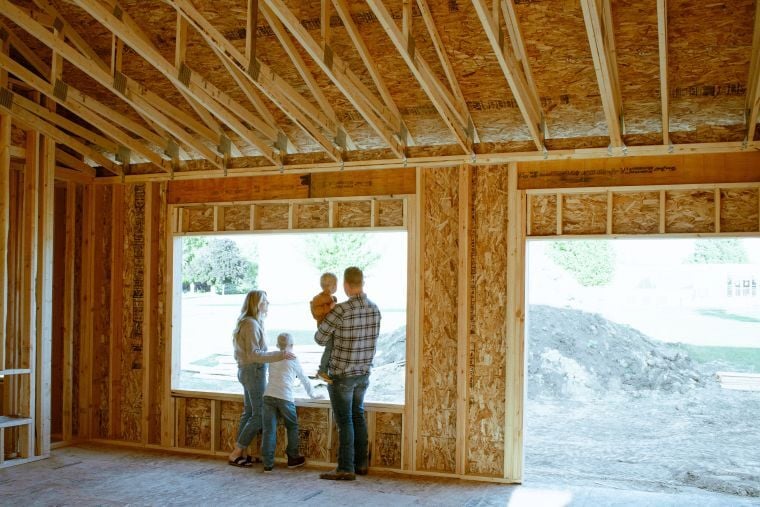
Learn how construction-to-permanent loans and Iowa loan programs work when you finance a custom home so you can move from budget to bank with confidence.
How construction-to-permanent loans work in Iowa
Financing a custom home in Iowa usually means using a construction-to-permanent loan rather than a standard mortgage, and the basics are simpler than they sound. In most cases, you secure one loan that pays for land, site work, and construction in stages, then converts into your long-term mortgage when the home is complete. During construction, you pay interest only on what has been drawn; after move-in, it behaves like a regular home loan.
In any financing guide, we also want you to see how this fits the bigger picture. This post is part of Origin’s Cost & Financing hub, and it should be read alongside Custom Home Budgeting in Iowa: 2026 Guide and Custom Home Down Payments and Closing Costs in Iowa. Those pieces help you define an all-in budget and understand cash needed at closing; this article focuses on the loan structures that connect your budget to the bank.
External Iowa-focused financing primers describe the same overall pattern. For example, Rural 1st’s guide to rural home construction financing explains how an existing lot loan may be refinanced into a construction loan. It also outlines a one-time-close option that combines construction and permanent financing, eliminating the need for another loan application or approval process after the build. A more detailed 2026 breakdown from another Central Iowa builder, Financing Your Custom Home Build in Iowa: Construction Loans & 2026 Options Explained, spells out typical interest rates, down payment ranges, and example payment amounts.
At Origin, we take that general framework and apply it to your land and your comfort range. We help you and your lender map out how much of your total project budget will come from savings and how much from the construction loan, and we make sure the line-item estimate for your specific Iowa project matches what your lender expects to see.
Comparing Iowa loan programs and local lenders
Once you understand how construction-to-permanent loans work, the next question is which specific program and lender best fit your situation. Both Central and rural Iowa buyers typically see three broad categories:
-
Conventional construction-to-permanent loans from local banks and credit unions.
-
Government-backed options such as FHA, VA, and USDA one-time-close loans in specific situations.
-
Iowa Finance Authority (IFA) programs that can improve permanent mortgage terms for qualifying buyers.
Independent guides that zero in on Iowa programs are helpful here. This companion piece to a broader financing guide, Financing Your Custom Home Build in Iowa: IFA, VA, FHA, and USDA Programs, explains how IFA’s FirstHome and Homes for Iowans products can pair with construction loans to lower your long-term rate or provide limited down-payment assistance. It also outlines how VA and FHA one-time-close loans work and when USDA’s Rural Development financing might apply in small-town Iowa.
At a practical level, most Origin clients end up with a conventional construction-to-permanent loan from a local lender that understands Iowa appraisals and rural property values. That local knowledge matters when you are building on acreage outside Albia, Monroe, Shenandoah, or other small towns where recent comparable sales may be limited.
When comparing lenders, we encourage you to look beyond just the headline rate. Ask each bank or credit union how they:
-
Handle the transition from construction loan to permanent mortgage.
-
Structure draws and inspections during construction.
-
Charge fees for rate locks, extensions, or second appraisals.
-
View rural properties versus in-town lots in your specific county.
Guides like Essential Guide to Construction Loan Requirements in Iowa explain why lenders care so much about detailed plans, realistic budgets, and builder experience. Origin’s role is to provide clear drawings, thorough estimates, and steady communication so your lender has confidence in the project from day one.
Practical steps, timelines, and FAQs for Origin buyers
Putting all of this together can feel complex on paper, but the steps are straightforward when you walk through them in order.
-
Clarify your all-in budget. Use Custom Home Budgeting in Iowa: 2026 Guide to sketch a realistic range that includes land, site work, and the home itself.
-
Talk with a local lender. Share your budget range, income, and debts so they can pre-qualify you and suggest loan types that fit.
-
Meet with Origin. We discuss land (existing or desired), layout priorities, and timing, then begin rough pricing that matches what your lender has in mind.
-
Align plan and loan. Once a concept plan is ready, we refine the estimate so your lender can underwrite the construction-to-permanent loan with real numbers for your specific Iowa site.
-
Close and build. You close on the construction loan, we break ground, and draws are requested as work is completed and inspected.
As you move through those steps, third-party resources can make unfamiliar terms easier to follow. For example, this 2025 article, How to Qualify for a Construction Loan in Iowa, defines key concepts like draws, interest reserves, and contingency requirements. The 2026 guide from Busy Builders noted earlier provides concrete examples of what monthly interest-only payments might look like during construction for different project sizes.
Latest from the Blog
Discover expert resources for building a custom home in Iowa. Explore guides on construction loans, acreage builds, rural living, floorplan design, land selection, and the custom home process with Origin Homes.
.jpg?length=360&name=2249%20Yates%20Ave_Marshalltown_Fuller_Origin%20Homes_April%202026_Drone%20(11).jpg)
1.jpeg?length=360&name=Origin_Pothoff_Photos_5-17%20(3)1.jpeg)