
Discover how insulation, air sealing, efficient HVAC, and thoughtful window choices can help Iowa custom home buyers reduce long-term energy costs and enjoy year-round comfort.
Energy-efficient features can quietly put hundreds of dollars a year back in the pockets of Iowa custom home buyers — without asking you to live in a science experiment. When you are designing a fully custom home with Origin on your land near Knoxville, Indianola, Monroe, Pleasantville, Adel, or the open countryside between, the most valuable upgrades are usually the simple ones: better insulation and air sealing, thoughtful window choices, efficient heating and cooling equipment, and sensible controls.
All of these features work together to shrink the amount of energy your home needs to stay comfortable. That matters more in Iowa than in milder states because our furnaces and air conditioners work hard in both January and July. If you can keep heat where you want it and stop drafts before they start, your mechanical systems can be smaller, run less often, and last longer. Over time, that means lower utility bills, fewer repair calls, and a house that feels less drafty and more steady in every season.
For a broader overview, read Energy-Efficient Custom Homes in Iowa: A Practical Guide. You can also explore What HERS Scores Mean for Iowa Custom Home Buyers to connect specific features to measurable performance.
To keep this guide grounded, it helps to look at independent, Iowa-specific research rather than broad national averages. A 2026 breakdown of the custom home building process in our state explains how efficiency upgrades affect overall costs and comfort, from reduced heat loss to quieter homes and right-sized mechanical systems: Mastering the Home Building Process in Iowa. Another up-to-date review of energy upgrades for Iowa homeowners cuts through outdated tax-credit claims and focuses on improvements that still make financial sense in 2026 — especially better insulation, air sealing, and high-efficiency HVAC paired with utility rebates: Top Energy Efficient Home Upgrades for Iowa Homeowners.
Start with the Features That Matter Most
For a move-up family in Indianola or an empty-nester couple building a ranch near Knoxville, the pattern is the same. Invest first in the parts of the home that never go on sale again — the envelope and structure. Then choose equipment and controls that make the most of that strong shell. Flashier options like solar panels or complex automation can be layered in later if they still make sense, but the long-term savings nearly always begin with basics.
How Much Key Upgrades Can Really Save Iowa Custom Home Buyers
Once you understand the main categories — shell, windows, HVAC, and controls — the next question is practical: What kind of savings can an Iowa family or empty nester actually expect?
Start at the top. Upgrading attic insulation from a bare-minimum code level to a higher-performance level can trim heating and cooling loads by 10–20% in many Midwestern homes. During construction, that might mean a few thousand dollars for additional blown-in insulation. On a typical Central Iowa home, that can save a few hundred dollars a year on combined gas and electric bills. Over 10 years, the upgrade may pay for itself once or twice over, and upper bedrooms will feel more comfortable in both January winds and July heat.
Wall insulation and air sealing deliver similar steady returns. A tighter, better-insulated shell reduces the amount of warm or cool air you need to produce and makes it possible to install smaller, more efficient equipment. External cost breakdowns for Iowa show how energy-efficient construction can keep monthly carrying costs in check even when upfront prices feel higher. The 2026 process guide cited earlier — Mastering the Home Building Process in Iowa — notes that homes built with stronger envelopes often see lower lifetime costs once utilities and maintenance are included.
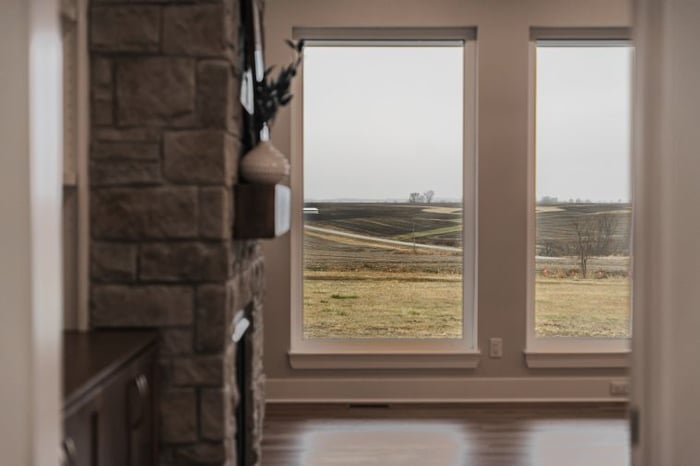
Windows typically account for a smaller slice of total energy loss than walls and attics, but better glass and frames still matter — especially for comfort. In rural areas around Knoxville or Monroe, high-quality windows reduce drafts, cut down on cold glass in winter, and make it easier to sit near big panes without feeling chilled. That comfort gain can allow you to set the thermostat a degree or two lower in winter or higher in summer without noticing, which quietly compounds savings over time.
Heating, Cooling, and Everyday Energy Savings
The biggest single equipment decision is usually heating and cooling. A properly sized, high-efficiency gas furnace and air conditioner can trim energy use 10–15% compared to basic models. Air-source heat pumps — especially cold-climate units — can cut heating energy use even further when paired with sensible backup strategies. Independent Iowa upgrade guides highlight that, when you factor in today’s utility rebates, high-efficiency HVAC often delivers some of the strongest returns: Top Energy Efficient Home Upgrades for Iowa Homeowners. Utility-level summaries confirm that MidAmerican and Alliant offer $300–$700-plus in instant discounts for qualifying heat pumps and other efficient equipment: Iowa Heat Pump Rebates & Incentives (2026).
Finally, low-cost steps — LED lighting throughout, smart thermostats set up with simple schedules, and shaded west-facing glass — tend to stack quiet savings. None of these will make or break your budget, but together they can trim another slice off monthly bills while making everyday life a little easier in towns like Pleasantville, Adel, or the rural miles between.
Simple Steps to Choose Upgrades with Confidence
The first step is ranking upgrades. Start with “must-do” items that protect comfort and performance: solid attic insulation, good air sealing, and right-sized HVAC. These are the upgrades that nearly always pay off, regardless of gas and electric prices. Once those are locked in, look at your remaining budget and consider higher-end windows, upgraded ventilation, or more advanced controls as optional layers.
Rebates are the second lever. Utility instant discounts from MidAmerican and Alliant can cover hundreds of dollars per qualifying HVAC system and sometimes smart thermostats or water heaters. The 2026 statewide summary at Iowa Heat Pump Rebates & Incentives (2026) is a helpful cross-check so you are not relying on outdated information. When we plan your Origin home, we look up current programs for your address and timing so you can see how incentives affect the math.
Resale value is the third consideration. Buyers throughout Central and rural Iowa — including Knoxville, Indianola, and Pleasantville — are paying more attention to utility costs and comfort. A home with clearly documented efficiency features, utility histories, or a HERS score often stands out in appraisals and listings, especially when buyers are comparing it to older houses with unknown systems. You may not see a dollar-for-dollar return on every upgrade, but well-chosen features make your home easier to own and easier to sell.
The construction side is simpler than most people expect. An “efficient build” does not require exotic methods; it just asks trades to pay closer attention to details like insulation coverage, air sealing, and duct layout. We build those expectations into our plans and walkthroughs so the field team knows efficiency is part of the job, not an optional extra.
Latest from the Blog
Discover expert resources for building a custom home in Iowa. Explore guides on construction loans, acreage builds, rural living, floorplan design, land selection, and the custom home process with Origin Homes.