

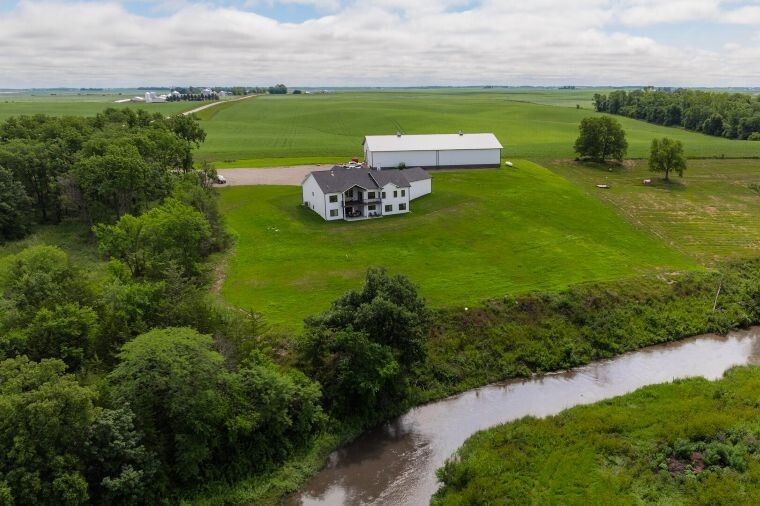
 Practical checklist-style guidance to help Iowa landowners quickly evaluate whether their property is truly ready for a custom home build.
If you already own land in Iowa — or you are eyeing an acreage listing outside a town like Brooklyn, Marshalltown, or Lamoni — it is tempting to assume you can simply drop a custom home on it when the time is right. In reality, not every parcel is truly build-ready, and some “dream” properties hide expensive surprises in their soils, access, or zoning rules.
At a high level, land is build-ready in Iowa when three things are true: you can legally build a home where you want to place it, you can affordably bring in utilities and a safe driveway, and the ground itself can support the foundation and septic system your county requires. If any one of those three is shaky, the whole project becomes harder and more expensive than it needs to be. This post gives you a straightforward, Iowa-specific checklist so you can spot green lights and red flags early.
Within the first few hundred words of any land evaluation, we also want you to remember two related resources. First, Building on Your Iowa Land: Start-to-Finish Guide walks through the entire build-on-your-lot process, from first ideas to move-in. Second, Plan Land, Budget, and Design Together from Day One shows how to think about land and house as one plan instead of two separate purchases.
As you start inspecting a property, look past the obvious. A pretty tree line and a nice view over fields are worth noting, but the most important questions hide in the details. External acreage-buying checklists written for Iowa buyers highlight the same idea: wells, septic systems, easements, and access often matter more than cosmetics. This practical guide, for example, lists six overlooked checks that can make or break a rural purchase: 6 Overlooked Checks When Buying Acreage Properties in Iowa.
We also encourage you to look up basic zoning and building restrictions for the county you are in. Many Iowa counties require permits even in unincorporated areas and have setback, height, and use rules that determine where a house and septic system can go. A broad, Iowa-wide overview of building restrictions, like this guide, can help you see what kinds of questions to ask your local officials: Building Restrictions in Iowa: Complete Guide. We then bring that information down to street level for your actual parcel.
Once you have a short list of promising parcels — or you already own land you hope to build on — the next step is looking for the hidden costs that can quietly blow up a budget. Most surprises fall into a few buckets: utilities, access, soil and drainage, and rules you cannot see from the road.
Utilities and services
In town, you can usually assume city water, sewer, and power are available at the lot line. On rural Iowa ground, those assumptions can be expensive. Before you fall in love with a view outside Knoxville, Humboldt, or Washington, find out:
-
Is rural water available, and at what connection cost and pressure?
-
Will you need a well, and if so, are there known depth or quality issues in the area?
-
Is there an existing septic system, and does it meet current county requirements — or will you need a new one?
-
How far will power, internet, and natural gas (if available) need to run, and across whose land?
Guides aimed at Iowa acreage buyers underline how often wells and septic systems become sticking points. This acreage checklist, for example, calls out private utilities as one of the most frequently overlooked issues in rural property purchases: 6 Overlooked Checks When Buying Acreage Properties in Iowa. We take the same approach at Origin, working with county environmental health staff and utility providers to get real numbers before you close.
Access and driveways
A gravel lane that looks charming in June can be a very different story in February. When you study access, think about:
-
How you will safely enter and exit from the county road, including sight lines in snow and rain.
-
Where the driveway will run, and whether it will tend to wash out or drift shut.
-
How far delivery trucks, concrete trucks, and moving vans will need to travel on your lane.
Counties regulate driveway entrances where your lane meets the public road and will often require a permit, specific culvert sizes, and certain distances from intersections. While standards vary, external resources that explain how Iowa site plans and county permits work give a good sense of why access matters so much: Site Plan Requirements in Iowa for Building Permits and this Story County example, which reminds rural homeowners that permits are required even in unincorporated areas: Story County Applications and Permits.
Soil, drainage, and build pad
Soft spots, steep slopes, or low areas that hold water can make construction more complex. If you notice cattails, standing water long after a storm, or sharp breaks in grade, flag those spots. We may recommend a simple geotechnical report or extra grading to create a stable, well-drained build pad. Articles that walk through custom-build checklists in Iowa, like this one, show how early grading and drainage thinking pays off later: Custom Build Checklist from Land to Final Walkthrough.
Local rules you cannot see from the road
Zoning and building restrictions can affect where and what you can build even on “wide open” ground. Before you get too attached, review zoning maps, setback rules, and any recorded easements. Broad overviews of Iowa building restrictions, like this guide, can give you a starting point before you dig into your specific county’s ordinances: Building Restrictions in Iowa: Complete Guide. We will then help you interpret what those rules mean for your exact parcel.
By stacking these checks — utilities, access, soil, and rules — you can quickly see whether a property is truly build-ready or will require extra dollars and patience to bring to the starting line. For many buyers, that knowledge is the difference between a peaceful build and a project that feels like an uphill climb from day one.
Putting all these pieces together can feel like a lot, especially if this is your first time dealing with wells, septics, or rural zoning. This final section narrows the list to a few clear decision checkpoints and answers the questions we hear most from Iowa landowners.
Latest from the Blog
Discover expert resources for building a custom home in Iowa. Explore guides on construction loans, acreage builds, rural living, floorplan design, land selection, and the custom home process with Origin Homes.
-1.jpeg?length=360&name=Lifestyle_Field%20Shoot_Origin_2022%20(82)-1.jpeg)